
Alishan Tour Guide: Sunrise, the Sea of Clouds, and Ancient Forests
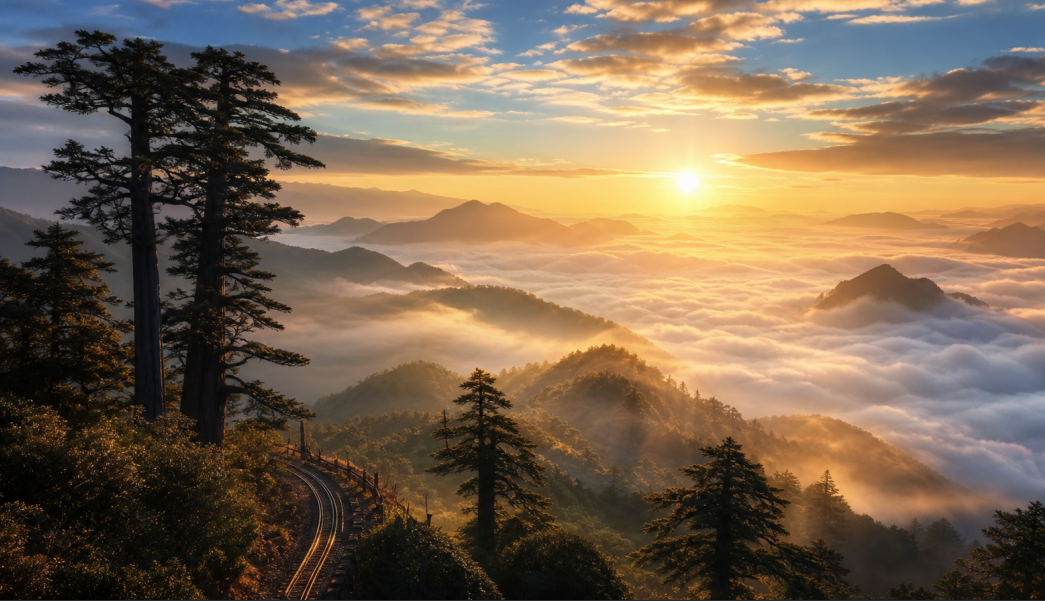
Alishan is Taiwan’s most famous mountain resort, a cluster of misty peaks and thousand-year-old cypress forests in Chiayi County at roughly two thousand to two thousand five hundred metres. The classic Alishan experience is the dawn train to Zhushan Station for sunrise over a sea of clouds, followed by boardwalk trails past sacred trees, the historic Forest Railway, and, in season, more than a thousand cherry trees. Most visitors stay at least one night inside the Forest Recreation Area, because the sunrise is only realistically reachable from in-park hotels, and book months ahead since rooms sell out fast.
What Alishan Actually Is, and Where the Confusion Starts
Type Alishan into a map and it points to a sprawling mountain range straddling three counties, which is why first-timers get muddled. What nearly everyone means by the name is the Alishan National Forest Recreation Area, a protected park, not a national park, along Provincial Highway 18, originally the hunting grounds of the indigenous Tsou people who still live in the region. The air sits about ten degrees cooler than the lowlands, and fog rolls in and out within minutes, lending the forests the look of a classical ink painting.
That cool, mist-prone climate shapes every decision you make up here. The park is compact and walkable, but the wider scenic area folds in tea villages, old railway towns and Tsou cultural sites lower down the slopes. Treating Alishan as a single viewpoint is the common mistake; treating it as a small mountain world with a sunrise, a forest and a railway at its core sets the right expectations for a well-planned trip.
The Sunrise at Zhushan and the Elusive Sea of Clouds
Zhushan Station sits at two thousand four hundred and fifty-one metres, the highest on the railway, and the dawn ritual is half the reason people come. The sunrise line departs roughly an hour before the sun clears the Yushan range, anywhere from four in the morning in peak summer to six in deep winter, so check the posted time at Alishan Station the afternoon before. The main observation deck is busiest and a little tree-obstructed; the short uphill walk to the Ogasawara lookout rewards you with a cleaner panorama.
Manage your expectations about the cloud sea itself, because it is genuinely rare, needing precise conditions that often deliver either total fog or a clear sky with nothing to see. Your best odds run from November to April, and an extra night doubles your chances. Whatever the clouds do, dress warmly, dawn can hit ten degrees even in summer, and the stalls at Chushan sell hand warmers, ponchos, tea eggs and hot soup to early risers.
The Forest Railway Versus the Bus
The Alishan Forest Railway is a romantic relic, built by the Japanese over a century ago to haul hinoki cypress down the mountain, and it is rightly counted among Alishan’s wonders. The catch is practicality: the full Chiayi-to-Alishan run takes about five hours, leaves once a day, and its limited seats sell out the instant they release. For most itineraries the railway is a beautiful constraint rather than a convenience.
The bus from Chiayi is the workhorse most planners recommend, two to three hours, far more frequent and easy to book, and arriving by bus even halves your park entry fee on presentation of the ticket. You can still savour the railway on the three short scenic lines inside the park, the Chaoping, Shenmu and Zhushan lines, which whisk you to the trailheads, the giant trees and the sunrise. A well-organised Alishan tour handles the Chiayi connection and the in-park timing so the once-a-day logistics never derail your day.
Ancient Cypress, Sacred Trees, and the Trails
Alishan holds Taiwan’s densest concentration of ancient cypress, and elevated boardwalks thread between red cypress that have stood for over a thousand years. The headline specimens are the Alishan Sacred Tree near Ciyun Temple, reckoned at around two thousand three hundred years, and the colossal Shuishan Giant Tree, estimated near two thousand seven hundred, reached by a flat, easy trail that conveniently dodges the crowds.
Most so-called trails here are gentle, well-maintained boardwalks suitable for all ages, with only Tashan and Duegaoyue qualifying as proper hikes. A satisfying first-timer loop rides the train to Chaoping, follows the Sister Pond Trail down to Shouzhen Temple, then circles the Giant Tree Trail before catching the Shenmu line back. Set out early, both to beat the tour buses that arrive mid-morning and to walk the mossy forest before the fog thickens.
Cherry Blossoms and High-Mountain Tea
From mid-March to mid-April Alishan becomes one of Taiwan’s great blossom destinations, with more than a thousand cherry trees and a famous King Cherry Tree over a century old. The Japanese first planted Yoshino cherries here in 1903, and the peak fortnight at the end of March draws such crowds that weekend traffic controls funnel visitors onto shuttles. The Police Lodge, where a train glides past the blossoms, is the photograph everyone wants.
Alishan High Mountain Oolong is Taiwan’s single most famous tea, but here is the nuance that catches people out: the plantations are not inside the recreation area, they sit in lower villages like Shizhuo and Xiding. Staying a night at a tea-farm guesthouse, where you can walk the gardens and sip just-roasted oolong with a mountain view, is one of the most rewarding ways to extend an Alishan trip beyond the sunrise.
Getting There, Staying Over, and Timing It Right
Chiayi is the hub: reach it by High Speed Rail in about ninety minutes from Taipei, then take the bus or railway up the mountain, or arrive on a direct bus from Sun Moon Lake in roughly three hours. Park entry runs three hundred NTD, halved if you come by bus or train, with modest parking fees for cars and scooters. A day trip is possible but rushed, one night gives you the classic experience, and two nights is the genuine sweet spot.
Accommodation is the real planning challenge. In-park hotels are limited, older and pricey, yet they are the only practical way to catch the sunrise, and many release rooms just two to three months ahead, selling out for cherry season, December and long weekends. Book as early as you can, or stay in a tea village or in Chiayi city and accept an earlier start. Either way, the mountain rewards travellers who plan the dates rather than improvise them.
read more : Why Travel Insurance Matters More Than Ever for South African Families


